Featured Post

Whipping Up Something Good for Thanksgiving?

The Olde Plow Shoppe has you covered for whipping up something tasty for Thanksgiving. Do you have some of these tools or remember your pare...

Friday, May 9, 2014

Oliver & Underwood Typewriters

The Oliver Typewriter No. 3
(source: sljohnson.net)
THE OLIVER TYPEWRITER was the creation of Rev. Thomas Oliver, born in Woodstock, Canada in 1852. He was reported to be a committed Methodist, as a young man he answered the call and served as minister in Epworth, Iowa for a time. According to lore, he designed his writing machine without ever seeing any of typewriters available at that time. The prototype for this unique machine is rumored to have been made of strips of tin cans, the first of his several typewriter patent, US Patent No. 450,107 from 7 April 1891, shows some support for that rumor.
The Oliver Typewriter Company began operating as a corporation in 1895. In 1926 the company stopped production and the board decided to liquidate the company. They retained one employee, Chester Nelson, to oversee the liquidation of the Oliver. Production was then resumed in England by the British Oliver Typewriter Company, and later they sold Oliver branded machines developed by other firms.

The general design of the Oliver Typewriter remained mostly unchanged for most of its early history. Production of the Oliver No. 1 began in the fall 1894. The Oliver No. 2 was introduced in 1896. The Models No. 3, No. 5, No. 7, No. 9, and No. 11 were introduced in about 1902, 1907, 1914, 1915, and 1922, respectively. Oliver finished their machines in varying shades of olive green enamel or full nickel, with a white or black keyboard depending on the customers preferences. If customers did not specify the finish and keyboard color they wanted, the company would use its own judgment in filling orders, which appeared to be the olive green enamel and white keyboard. The last model produced in the United States was the Model No. 11, this model lost the familiar handles and color. Oliver may have offered other color variants however no documentation has been found. What is known is that some remanufacturing companies refinished some Olivers in various colors; gray, maroon, black, etc...some machines may even have had new decals added.
Underwood Typewriter 1920's
(source: mytypewriter.com)
The design that launched millions of typewriters! When it appeared on the market shortly before 1900, the Underwood No. 5 immediately became the design standard for all typewriters to come, all the way up until the 1960s when the IBM Selectric came out. This is the most successful typewriter design in history, and by 1920 almost every typewriter in production was using some imitation of the Underwood No. 5 design. The production of the Underwood Models 3, 4, and 5 lasted until early 1932. The difference among the three models are subtle: The No. 3 is a wide-carriage machine, the No. 4 types 76 characters, and the No. 5 types 84 characters. The No. 5 was the quintessential Underwood. Millions of these machines were used by secretaries, journalists, government officials, and writers throughout the first half of the twentieth century. The classic desktop.

More History on the Typewriter

(source: About.com)
Christopher Sholes
Christopher Sholes was an American mechanical engineer, born on February 14, 1819 in Mooresburg, Pennsylvania, and died on February 17, 1890 in Milwaukee, Wisconsin. He invented the first practical modern typewriter in 1866, with the financial and technical support of his business partners Samuel Soule and Carlos Glidden. Five years, dozens of experiments, and two patents later, Sholes and his associates produced an improved model similar to today's typewriters.

Typewriter Trivia
  • George K. Anderson of Memphis, Tennessee patented the typewriter ribbon on 9/14/1886.
  • The first electric typewriter was the Blickensderfer.
  • In 1944, IBM designs the first typewriter with proportional spacing.
  • Pellegrine Tarri made an early typewriter that worked in 1801 and invented carbon paper in 1808.
  • In 1829, William Austin Burt invents the typographer, a predecessor to the typewriter.
  • Mark Twain enjoyed and made use of new inventions, he was the first author to submit a typewritten manuscript to his publisher.
In Honor of Mother's Day, we'd love to hear a story about your mother using a typewriter or any memory of the early typewriters...

Monday, August 12, 2013

New Items at the OPS

 Baker's Table - The art of baking bread spread across Europe thanks to the Roman Empire. Give Us This Day Our Daily Bread was common 100 years ago. These baker tables were hand-crafted and the one pictured here has two flour bins. These tables were in use before the Hoosier Cabinets of Indiana. These were three-part cupboards from early 20th century until the1920s.
 Tool Box & Tools - Studying antique tools provides a glimpse of human development and cultural preferences throughout history. Collectors vary: studying and cataloging, preserving, investing, using, collecting works of art or admiring fascinating mechanical design specimens
 Enamelware & Enamel Table - Enamelware is the term used for items that have a porcelain enamel finish. Enamelware grew in the 19th century. The process is thousands of years old. Electrolytes, metal oxides, water & clay are all used to make enamel. The enamel mixture is: feldspar, borax and quartz heated at high temps until they become liquid. A smelter is used to achieve the high temp. The mixture is poured between two high-pressure rollers that squeeze out excess moisture. Strips of glass are smashed to leave material called "frit". The frit is used to coat the material. Both the enamel & base are heated in a furnace which allows the materials to bond together.
Flax Crimper - Flax or linseed is a food and fiber crop grown in cooler regions. Flax fibers are taken from the stem of the plant and are two to three times stronger than cotton. Flax fibers are smooth and straight. Europe and North America depended on flax for vege-based cloth until the 19th century when cotton overtook flax as the most common plant used for making linen paper.

Monday, July 8, 2013

Commemorating 40 Years in Business--8 Signs Have Been Painted!


A Big Congratulations to Dennis & Barb--The Olde Plow Shoppe has been in business for 40 years--this April 2013! Eight signs have been painted this 4th of July weekend in celebration. Have you stopped in to visit? Many customers still come in saying they have driven by many years and decided to stop this time. It is quite the museum!

Sunday, June 16, 2013

Olde Plow Shoppe History

 Upstairs cottage
 Old stove where many customers like to cozy up to in the winter.


 New entrance drive.

Above photo: before Hwy. 47 expansion.
History: The building "Olde Plow Shoppe" was built in 1900 and ran as a general store until 1969.  The original owner was Charlie Ganschow and in the 1950's was taken over by his daughter and son-in-law, Ruth and Eddie Simonson.  The back addition of the store was a cheese factory and started operating in about 1908 until the farmers started a co-op cheese factory across the road.  The Dickman's bought the building in April of 1973.  From 1969 until 1973 it was owned by a couple of other people who did some remodeling of the upstairs apartment.   The upstairs has now become the owners' cottage near the lakes for fishing and family and friends' visits.

Dennis's Potato Gardens


Most years Dennis plants a potato garden. This year he has:
Pontiacs - top-notch mashing, thin red skin, shallow eyes, crisp white flesh
Kennebecs - large, light tan skin, uniform shape, fleshy insides, thin skin
Norkotahs - early maturing, released in 1987 by North Dakota State University, white flesh, long
                     oblong shape, medium to heavy russeted skin
Burbanks - large, dark brown skin, few eyes, dry white flesh

Wednesday, January 9, 2013

Fruit Jars & Copper Boiler


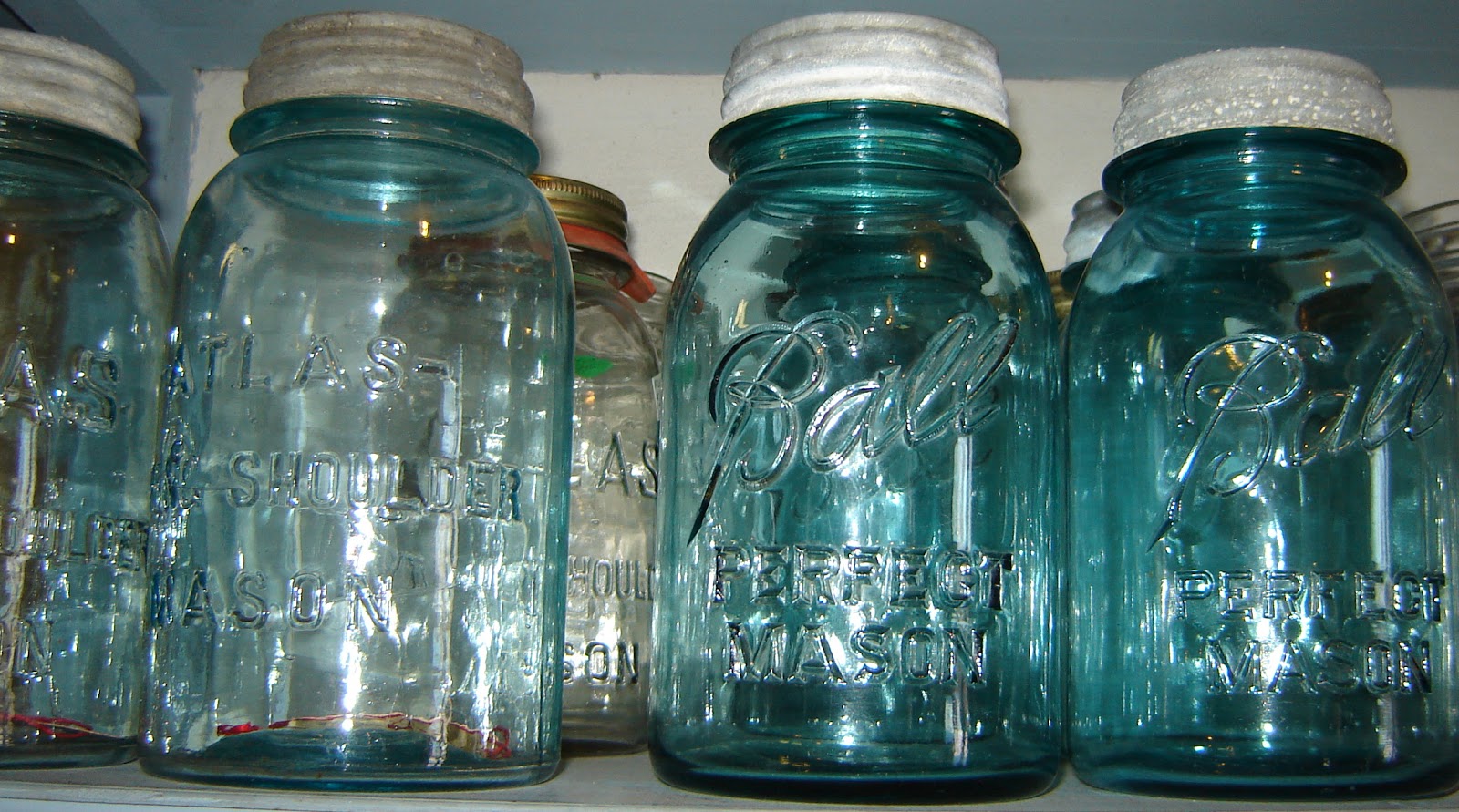
Dennis's antique business started with him collecting old bottles & fruit jars. He purchased a price guide book and began buying other items. Copper boilers were used for boiling water on the old wood stove for doing laundry, washing dishes and bathing.

Wednesday, December 5, 2012

Buying Plows & Picking Up Plow Handles


The Olde Plow Shoppe likes to pick up unique, unusual plows to display & sell--some are even for left-handers. These were purchased from an Amish Farm.
Dennis recently got back from a trip to Arkansas where he picks up plow handles to sell. He can only find them in Arkansas. Customers buy them to fix up old plows or cultivators where handles have rotted.

Front Yard Shop

Front Yard Shop
Front Display

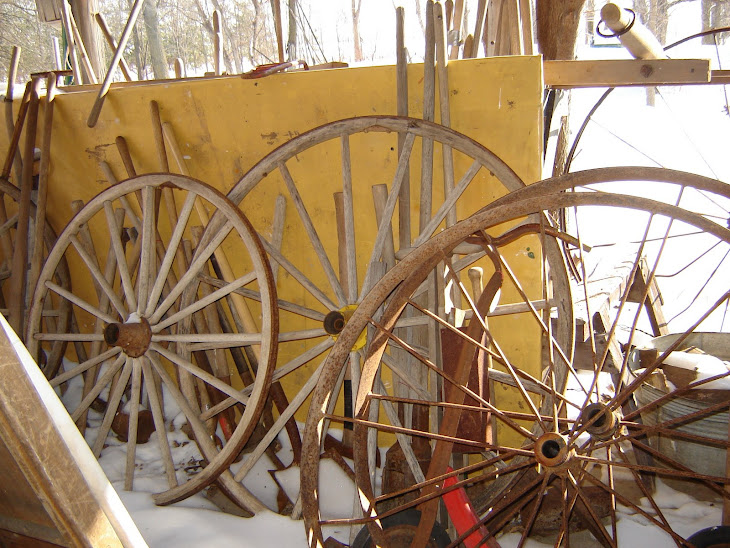
Buggy Wheels

Buggy Wheels
Under Lean-to